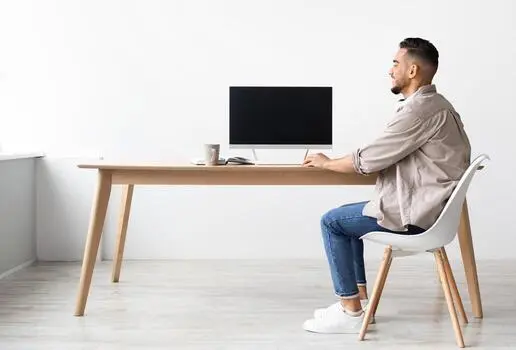
Calm, repeatable cues that fit between meetings — not a workout plan. Last reviewed today.
The "perfect" posture lasts about ninety seconds. What actually helps is a workspace that nudges you toward neutral when you drift, plus tiny movement cues you can do without breaking focus.
This guide collects the smallest changes that have stuck for our readers — none of them require new equipment.
Stand, roll the shoulders back three times, take one slow breath through the nose before opening the laptop.
While the kettle heats, reach overhead, then forward fold for ten seconds.
Take voice-only calls standing or pacing. It quietly adds up to thousands of extra steps per week.
Every 20 minutes, look at something 20 feet away for 20 seconds. Easiest if your desk faces a window or doorway.
Stand, step one foot back into a calm lunge, hold for 20 seconds each side. Helpful after long seated stretches.
Push the chair in fully, dim the lamp one notch, and write three lines for tomorrow. Cues the day to end.
Both flat on the floor or on a footrest. Knees should track over the ankles, not in front.
Slightly higher than knees. If your seat is too low, fold a blanket on top before buying anything.
Soft 90° angle when typing. Adjust desk or chair height before adjusting your shoulders.
The top third of the screen should sit at eye level. Books under the laptop work perfectly.
Tell us about your room and we will answer with friendly, specific suggestions.